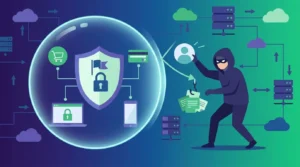
In the ever-evolving landscape of e-commerce, the evolution of online shopping security measures has been a pivotal journey. From the early days of online transactions to the sophisticated security protocols of today, understanding this evolution provides insight into the challenges and triumphs of protecting digital marketplaces.
The Dawn of Online Shopping
The origins of online shopping trace back to the late 20th century, a time when digital transactions were a novel concept. Initial security measures were rudimentary, primarily relying on basic encryption techniques to protect sensitive information. As online shopping gained traction, the need for more robust security protocols became evident.
The Introduction of SSL Certificates
Secure Sockets Layer (SSL) certificates marked a significant advancement in online shopping security. Introduced in the mid-1990s, SSL provided a secure channel for transmitting sensitive data, such as credit card information. This technology laid the groundwork for the trust between consumers and online retailers, a relationship further explored in customer service practices.
Emergence of Two-Factor Authentication
Two-Factor Authentication (2FA) became a game-changer in the security domain. By requiring an additional verification step beyond a password, 2FA significantly reduced unauthorized access. This innovation proved crucial as cyber threats became more sophisticated, aligning with the broader theme of passwordless authentication.
Advancements in Encryption Technology
As encryption technology advanced, online shopping platforms adopted stronger algorithms to safeguard user data. These advancements not only protected financial transactions but also helped in building consumer confidence. Encryption remains a cornerstone of online security, as explored in articles on browser extensions.
Rise of Artificial Intelligence in Security
With the advent of artificial intelligence (AI), online shopping security measures took a quantum leap forward. AI technologies now detect and mitigate fraudulent activities in real-time, enhancing the overall security infrastructure. This shift is part of a broader trend towards leveraging AI for fraud prevention, as detailed in AI-driven security measures.
The Role of Blockchain and Cryptocurrency
Blockchain technology and cryptocurrencies introduced a new dimension to online shopping security. By decentralizing transactions and providing transparent ledgers, these technologies offered unprecedented security and privacy. The implications of cryptocurrency in online transactions are further examined in cryptocurrency articles.
Biometric Authentication
Biometric authentication, such as fingerprint and facial recognition, has become increasingly prevalent in online shopping. These technologies provide an additional layer of security by ensuring that only authorized users can access their accounts. The rise of biometric systems represents a significant shift towards more personalized security measures.
Enhancing User Experience While Ensuring Security
As security measures evolved, there was a parallel focus on enhancing the user experience. Balancing security with convenience remains a central challenge for online retailers. Efforts to improve user experience without compromising security are covered in discussions about the user experience.
Cyber Hygiene and Consumer Awareness
The evolution of online shopping security is not complete without acknowledging the role of consumer education. Encouraging cyber hygiene and proactive security practices among shoppers has become essential in the fight against cybercrime. Awareness campaigns and educational initiatives continue to play a vital role in fostering a secure shopping environment.
The Future of Online Shopping Security
Looking ahead, the future of online shopping security is poised to witness further innovations. Emerging technologies, such as quantum computing and advanced AI, promise to transform the security landscape. As these technologies develop, the commitment to protecting consumer data and maintaining secure online transactions will continue to be paramount.
Regulatory Frameworks and Compliance Standards
As online shopping expanded globally, the need for regulatory frameworks and compliance standards became apparent to ensure the protection of consumer data and to foster trust in e-commerce platforms. Governments and international bodies began to establish regulations that dictated how online retailers should manage and protect consumer information. One of the most influential regulations in this regard has been the General Data Protection Regulation (GDPR) enacted by the European Union in 2018. This regulation mandates that businesses protect personal data and uphold the privacy rights of individuals, setting a high standard for data protection worldwide.
Similarly, in the United States, the Payment Card Industry Data Security Standard (PCI DSS) provides guidelines for secure handling of card information to prevent data breaches and theft. Compliance with these standards is not only a legal obligation but also a competitive advantage, as consumers increasingly prioritize privacy and data security in their purchasing decisions. Companies that fail to comply with these regulations face significant fines and damage to their reputation, which underscores the importance of adherence to these standards.
Furthermore, emerging markets are also developing their own regulations to cater to the growing e-commerce industry, ensuring that consumer protection is upheld across different regions. This global trend towards robust regulatory frameworks highlights the critical intersection of technology, law, and consumer rights in the realm of online shopping security.
Incident Response and Crisis Management
Despite the advancements in security measures, online retailers must be prepared for potential security breaches. An effective incident response plan is crucial in minimizing the damage caused by security incidents and maintaining consumer trust. Incident response involves a systematic approach to managing and addressing security breaches or attacks. It includes identifying the breach, containing the threat, eradicating the cause, recovering systems and data, and analyzing the incident to prevent future occurrences.
Crisis management extends beyond the technical aspects of security breaches and encompasses communication strategies to inform and reassure stakeholders, including customers, partners, and regulatory bodies. Transparency and timely communication are vital in maintaining consumer trust and mitigating the reputational damage that can accompany security incidents. Companies often rely on dedicated teams or external experts to handle the multifaceted challenges of a security breach.
To enhance their preparedness, businesses conduct regular drills and simulations of potential security incidents, known as “tabletop exercises.” These exercises help refine incident response plans and ensure that all stakeholders understand their roles and responsibilities. The ability to quickly and effectively respond to security breaches can significantly mitigate the impact on both the company’s operations and its reputation.
Privacy Enhancing Technologies (PETs)
In recent years, Privacy Enhancing Technologies (PETs) have gained attention as critical tools in safeguarding consumer data during online transactions. PETs are designed to protect personal information while enabling businesses to analyze and utilize data without compromising privacy. One such technology is differential privacy, which allows companies to extract insights from data sets while ensuring that individual user data remains anonymous.
Another significant PET is homomorphic encryption, which enables data to be processed in its encrypted form. This means that businesses can perform computations on encrypted data without needing to decrypt it first, thus preserving privacy throughout the data processing stages. Such technologies are particularly beneficial in sectors like finance and healthcare, where sensitive data must be handled with utmost care.
Moreover, zero-knowledge proofs are gaining traction as a means to verify information without revealing the underlying data. This technology allows users to prove the validity of their information, such as identity verification, without sharing their actual data. As the demand for privacy in online transactions grows, PETs are likely to become integral components of online shopping security infrastructure, offering a balance between data utility and privacy protection.